
Who done it?

[Peter Basch: Brigitte Bardot]
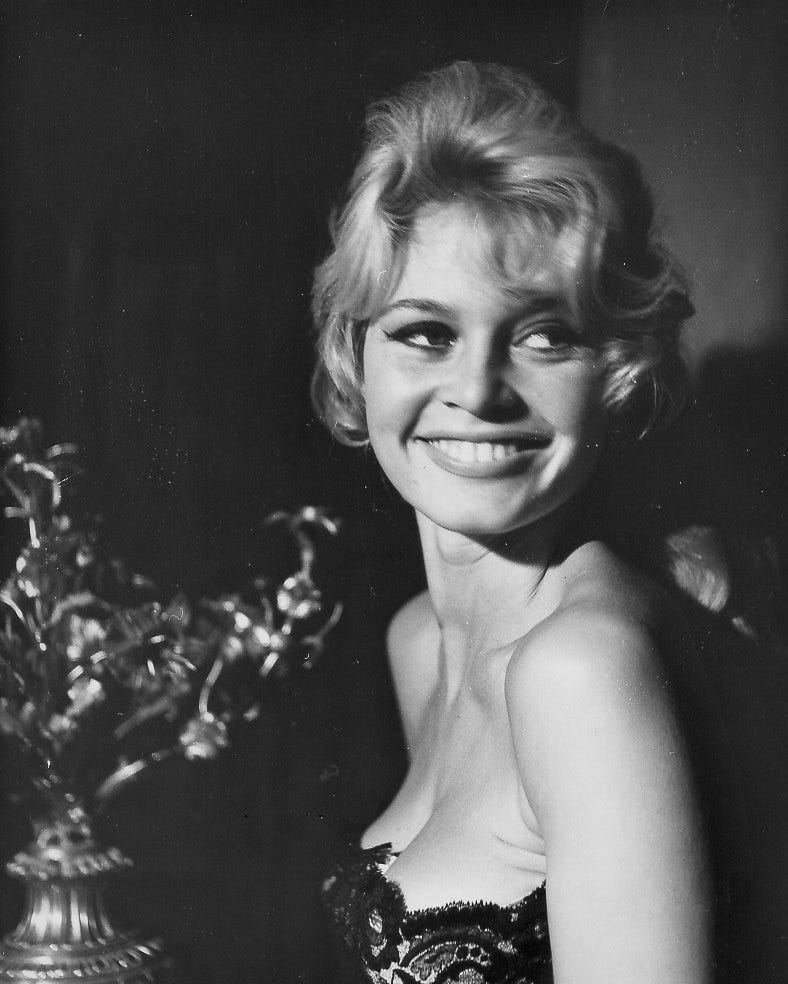
A few weeks ago, I posted a note on the passing of Brigitte Bardot (1934 - 2025). She was a beautiful actress, much loved by the camera, and had a great run, particularly during the 1960s. Later in life, she was known as a voice, and strong advocate, for animal welfare. But, during the last third of her long life, it became increasingly clear that she was an ultra right-wing racist. This led me to write this post. It is a difficult topic, but an important one, I think…..
[Leni Riefenstahl: Jesse Owens preparing for the long jump. Berlin Olympics, August 1936, vintage print]
It is a simple question: Can a photographer, or a subject, be separated from their photograph? Can you love a photograph, no matter who made it, or who it depicts?
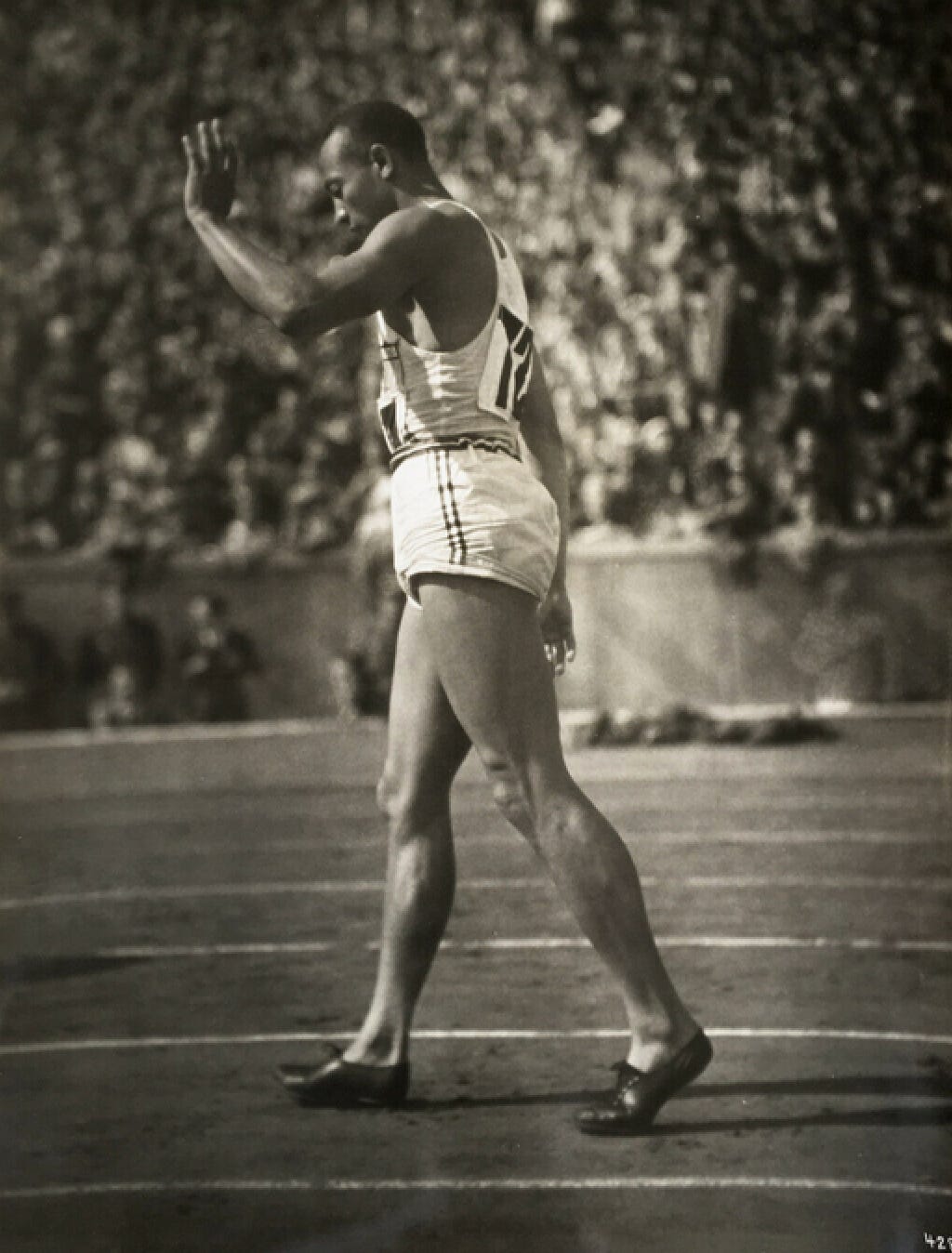
Can Leni Riefenstahl be admired for her genius behind the camera, despite her politics? Can great fashion images by Bruce Weber, Mario Testino, or Terry Richardson be separated from accusations of sexual misconduct? And can a photograph of Brigitte Bardot be separated from her extreme racist and political views?
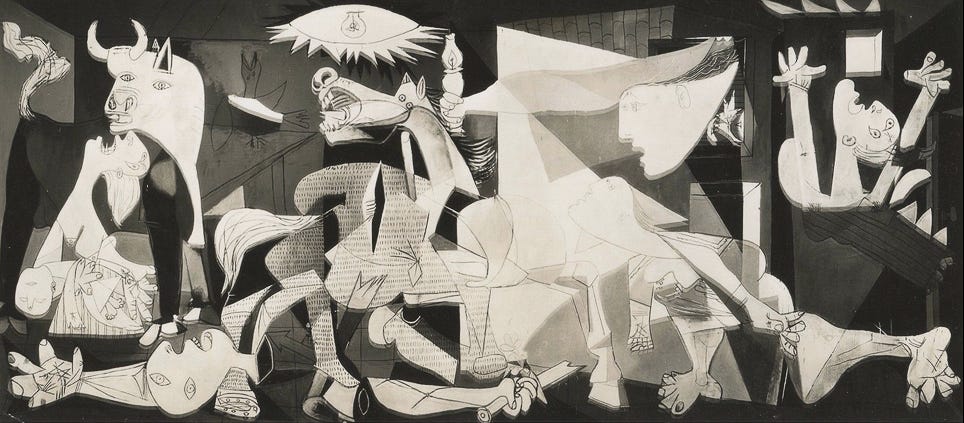
I have two friends, who take a hard line with Picasso. They cannot accept his behaviour, which they believe was domestic abuse, and psychological torture. To them, Picasso is a ‘bad’ person, and that extends to his art. They say that even if someone gave them a Picasso, they would not hang it!
[Soichi Sunami: Picasso’s Guernica]
It is a difficult thing to talk about and a difficult thing to argue, because most of the time, the person you are speaking with will be immovable from their position. For, or against.
[Bruce Weber: The Official Meeting of the Montana Rolleiflex Camera Club, Little Bear Ranch, McLeod, Montana, 1997]
I believe most of my fellow Substackers, who read my musings, will know I have a very simple approach to looking at photographs. I never read the curatorial sermon on the wall when I go to a gallery, or museum. Likewise, I never read a label until I have had time to study a photograph and form my own impression. Only then - and no guarantee it will happen – will I read the label. Even more rarely, will I commit time to the curator’s verbose explanation of ‘why’, posted by the entrance.
I do not find this to be difficult. It is natural for me. It is why I can admire an anonymous snap by someone who got seriously lucky and did something great, alongside a photograph by a recognised master of photography!
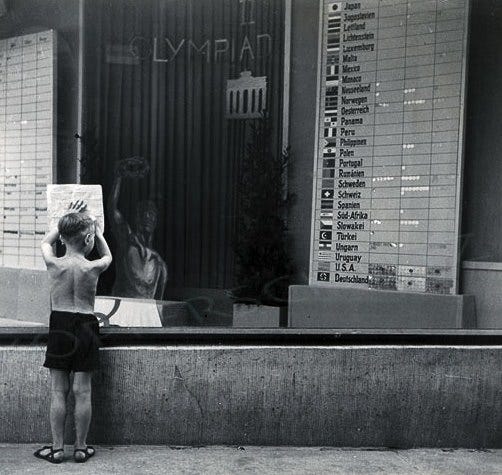
[Attributed to ‘Alberti’ from Bautzen, Germany: Young boy keeping track of the medal count, Berlin Olympics, 1936]
There are however things you learn, which you cannot unlearn. It is like seeing your grandma naked by accident. You cannot un-see it. When you read a backgrounder on a photographer and start to dig a bit, you learn new information. New to you. There are morally corrupt image makers. Law breakers. Despicable human beings. Criminal offenders. People who are just prickly and whom you dislike for whatever reason. There are photographers whom society has sentenced to be made examples of, be this through criminal prosecution, or simply through public shaming.
Have a look at the photograph below, which to me is one of the greatest portraits I know. It is a 16” x 20” silver gelatine print, which has hung on my wall since I bought it some 20 years ago. This photograph is from Galway. Her name is Jennifer.
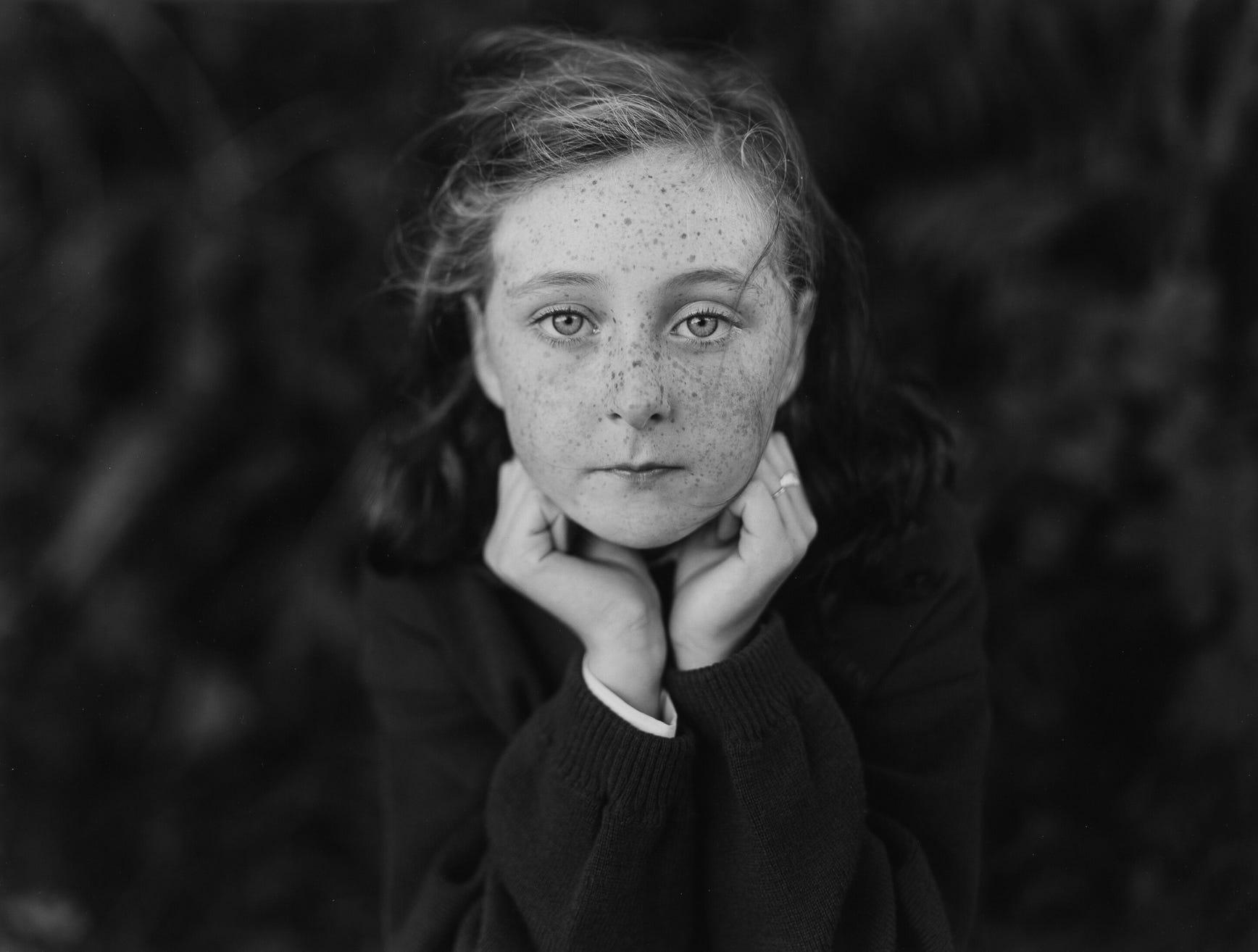
[Jock Sturges: Jennifer, County Galway, Ireland 1999]
For the past two years, I have known that in 2021, Jock Sturges was given a three-year suspended sentence for having had sex with a minor in 1975. He was a 28 year old instructor at a school, she was his 15 year old student.
Separating the photographer from the subject is not easy. It is a difficult discussion to have, even with yourself! It seems no matter which side of the argument you come down on, you will be accused of either being morally corrupt and having lost your way entirely, or you will be accused of being a stiff bore, insensitive to the miracle of a great photograph.
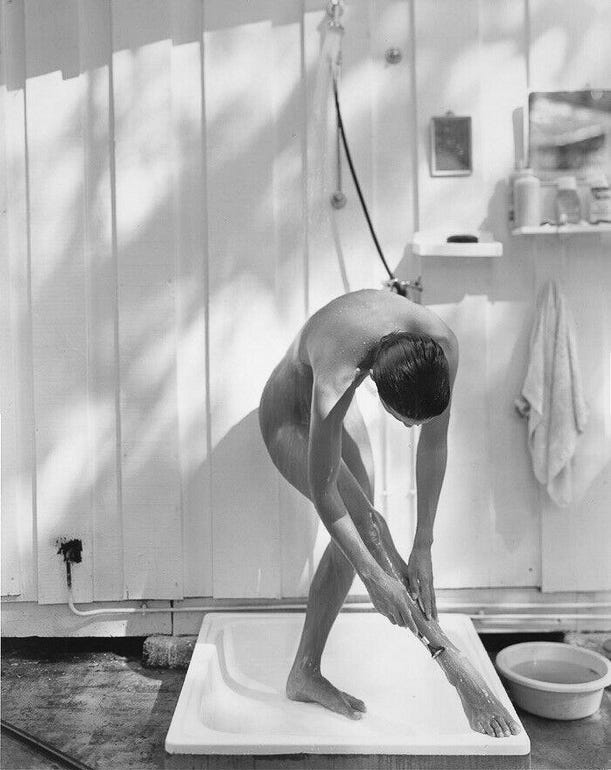
[Jock Sturges: Maia, 1991]
Is it a great photograph, even if you later find out it was made by a despicable person? Or someone who did something illegal? What if the person has paid their debt to society, through incarceration, fines, or other penalties? Can they be rehabilitated?
Max Hollein, the Director and CEO of the Metropolitan Museum of Art in New York said in a recent interview: “You do need to make a differentiation between the artwork and the life of an artist. The idea that you can only look at an artist’s work where the life of the artist is impeccable seems absurd.” Is he right?
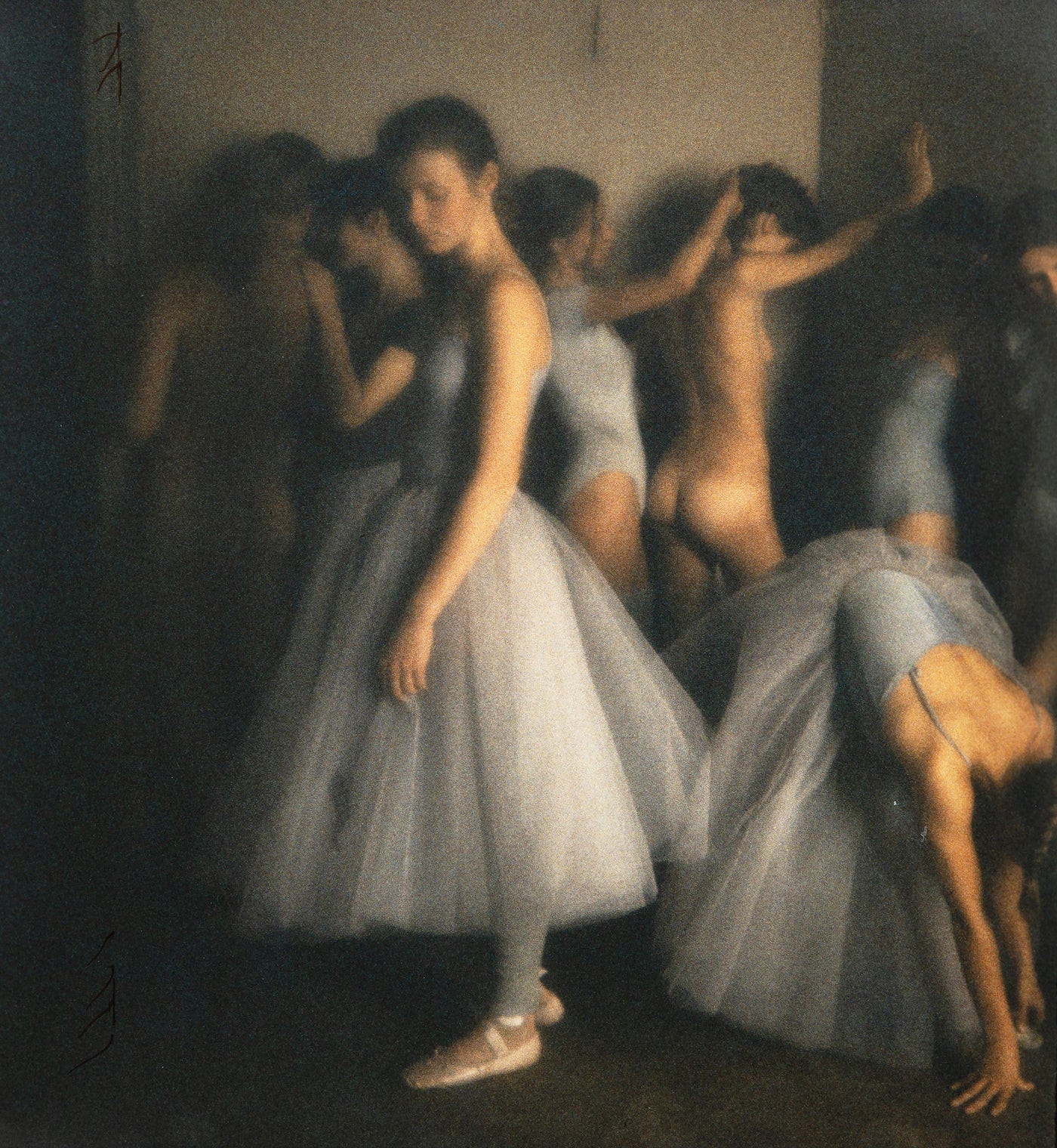
[David Hamilton: Degas Ballerinas 1996]
Does knowing something about the person behind a photograph change the merit of a photograph. Does knowing something about the person behind a photograph change the way you appreciate it. Let us for the moment forget about museums, exhibitions, boycotts and arrests. Forget the reactions of the society, in which we live, wherever we are around the world. Is it a great photograph? Does it deserve to be hidden away like its author?
I would like to think I can separate a great photograph from its author. According to my personal taste, of course. But, I don’t know if I can look someone in the eye, knowing what I know, and defend the merits of a great photograph made by someone, who is morally corrupt, or worse, without disclosing this. Maybe it is to absolve myself. Maybe it is because I am afraid of being yelled at, if the person later discovers incriminating information on their own.
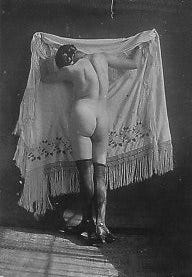
[Anonymous: Female nude, ca 1915 - contact printed ca. 1930 from a glass plate negative. NOT Grandma]
Aside from those already mentioned above, here are some other photographers to think about: Andreas Serrano, Robert Mapplethorpe, Sally Mann, Nobuyoshi Araki, Kohei Yoshiyuki, Larry Clarke, Garry Gross, Graham Ovenden, Arne Svenson, David Hamilton, just to name a few. They have all at some time, or other, been accused of being ethically or morally corrupt, or worse.
Should Jennifer from Galway stay on the wall, or should she come down? I think, I have made my decision. Have you?
Until next time….
When I view new art or photography, I tend to be uninformed about the background of the artist. So my first impressions are through the eyes of a child - a place of innocence. I form my own opinion about the merit of the image and move on.
If I then later discover something distasteful about the artist, I can’t help but have mixed feelings about the image that I previously knew nothing about. I will still appreciate it at face value, but there will be a nagging voice in my mind about the person behind it. Perhaps that diminishes my appreciation of the piece, because it is no longer purely about the art itself. History will judge the person, regardless of my knowledge about them. Maybe for that reason, I’d rather continue to be naive about the artist’s background when I view their work.
That said, I’d be happy to take a Picasso off your hands, if you are offering! 🤣
This is one of those issues that comes up again and again and is so difficult to answer, whether you’re talking about film (Bardot, Woody Allen), music (Richard Wagner), literature (Charles Dickens, Dr. Seuss) or photography. In general, I think art should be evaluated on its own merit, but in many circumstances—especially in public spaces and museums—if possible, there should be information displayed about the art or artist, so we can learn something and make up our own minds.
When it comes to private spaces, it’s more personal. I wouldn’t be able to look at a photograph on my wall, no matter how beautiful, by an artist who I believed to be a pedophile. I used to love Woody Allen movies and laughed at “The Bill Cosby Show,” but I can’t watch anything by either of them now. Yet I love Shakespeare and Dickens despite racist stereotypes of Jews, blacks and others. Perhaps it’s a matter of time passing—and also the age and place in which you live.